













Tag: bird-watching


23 Apr 2025
Benefits of feeding birds

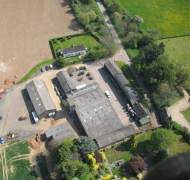
At Really Wild Bird Food, we’re no strangers to feeding birds. In fact, we’ve been providing Britain’s birds with nutritious and tasty meals since the nineties! On Street End Farm, just outside of Hampshire, we grow all sorts of healthy food for a variety of different garden birds.

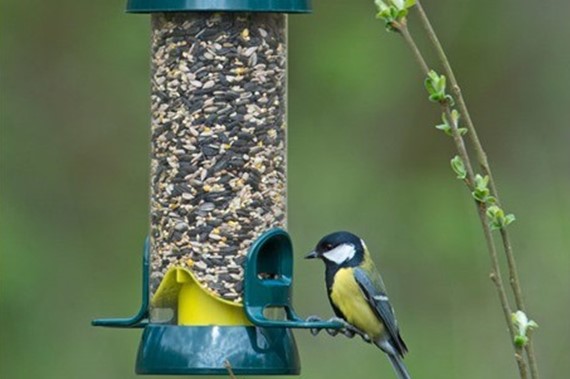
Whether you’re looking to help out your local bird population or just enjoy a spot of bird watching, here are some of the key benefits you can reap by putting a bird feeder in your garden.


What are the benefits of feeding birds?

  1. Helping your local birds
  2. Protecting your garden from bugs and weeds
  3. Pollinating your flowers
  4. Watching the birds
  5. Keeping UK bird species off the endangered list


1. Helping your local birds

Your local birds may struggle to find sources of nourishment, especially if you live in a built-up area. Providing high-calorie foods for your local birds can be a literal lifesaver (especially during the winter months, when natural food sources are at their most scarce).


2. Protecting your garden from bugs and weeds

Birds are great for your garden! For one thing, they will sometimes eat seeds that would otherwise have grown into weeds. Draw birds to your garden with a feeder, and they might pick up a few extra snacks along the way. This prevents the weeds from growing and ruining your lovely flower beds. You might also attract birds that eat slugs, such as starlings, robins and blackbirds. This can be handy if those slimy so-and-sos have been treating your garden like an open buffet.

While birds may naturally flit through your garden on occasion, the best way to get them to eat your bugs and weeds is to properly invite them to your garden with a good meal.


3. Pollinating your flowers

For the most part, we associate pollination with bees. While protecting bees is still very important because they are great pollinators, there are also some birds who can pollinate flowers too. This is great, because pollination is super important for the flowers in your garden. It’s also crucial for food production!

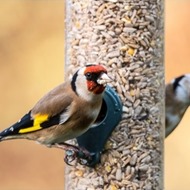
Birds pollinate flowers when they are trying to eat nectar. While the most well-known avian pollinator is probably the American hummingbird, there are UK birds that occasionally enjoy nectar too, like blue tits. You may see goldfinches burying their long beaks inside teasel flowers to get at seeds! When birds stick their beaks into a flower, pollen will get stuck along the beak. This can then be transferred to other flowers, pollinating them.

SEE ALSO: Planting Wildflowers in Your Garden


4. Watching the birds

There are good reasons why bird-watching is such a popular hobby: it’s relaxing, it’s entertaining, and it can help you feel closer to nature. Birdwatching can even help you to improve your mental wellbeing! Once you’ve set up a feeding station in your back garden, you can simply sit and enjoy the sight of the birds – or you can hone your ornithology skills by keeping a list of the different kinds of birds you see! People with restricted mobility can enjoy this accessible hobby from the comfort of their own home or garden.

This is one of the major benefits of feeding the birds. If you’ve never experienced the thrill of running to the window to spot an unusual bird in your garden, then you really should give it a try. 


5. Keeping UK bird species off the endangered list

While you might not see any immediate benefit from this on a personal level, this is possibly the most important point on this list. In the long run, preserving diversity in bird species is incredibly important for the ecosystem.

Birds help keep the population of small creatures they eat (like mice) from becoming a problem. Birds are also prey for a lot of wildlife. The loss of even one species of bird can have a significant impact on our entire ecosystem. By feeding your local birds – and putting up nest boxes to give them a safe place to rest – you can contribute to the preservation of bird populations.

SEE ALSO: Endangered UK Birds & How You Can Help Them


How to start feeding the birds

Interested in the above benefits of feeding birds? It’s really easy to turn these ideas into a reality. You can start feeding birds healthy and nutritious food with very little effort.

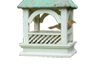
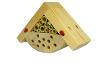
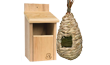
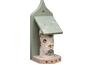
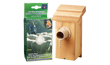
Firstly, pick out a bird feeder that suits your garden. We offer a great range for you to choose from, including both hanging feeders and bird tables. You might also consider putting up nesting boxes, which can offer your birds a place to shelter. It's also important to put out some clean water for birds to drink and clean with!

Once you’re ready to start shopping, simply click the button below to discover our huge range of bird seeds.
Shop Bird Food   More Bird Feeding Tips

15 Jan 2025
how birds fly

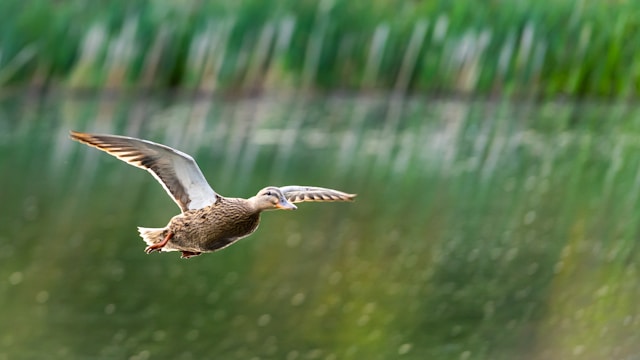
How do birds fly? They flap their wings, of course! But the mechanics of how this works are actually very interesting.

If you want to understand exactly how a bird soars through the air, we’re more than happy to fill in the blanks. Every flight is the result of millions of years of evolution – not to mention a lot of effort on the bird’s part – and we think that it’s a skill worth appreciating.


How Do Birds Fly?

There are many different kinds of birds, and variations in their wing shapes mean that there are slight differences to how they fly. However, most birds use the following method:

Birds first pull their wings down towards their chest, and then unfold them upwards. Because the front of a wing is lifted higher than the back of the wing, the air moves quickly over the top of it. Air speed has an impact on air pressure; specifically, faster air has less pressure than the slow-moving air beneath the wing.

Air always moves from an area of high pressure to an area of low pressure. For instance, when a car tyre is punctured, the high-pressure air rushes out through the hole. In the case of a bird taking flight, the high-pressure air from beneath the wing is moving up to the low-pressure area above the wing. This creates lift...and up the bird goes!

Imagine placing a piece of paper on a balloon, then puncturing it. The paper would go up with the air that’s leaking out. The difference is that the paper would just move with the air, but a bird can use its tail to steer and shift directions.

So, why can’t we humans do this? Surely, if all it takes to fly is a shift in air pressure, it shouldn’t be hard to make yourself a pair of wings and take to the skies. What do birds have that we don’t?


Birds Are Built to Fly!

Here are some of the biological features (besides wings) that allow birds to fly:

  • Heavier in the middle

All of the heaviest parts of a bird (including most of its organs) are in the middle of its body. This gives the bird a concentrated centre of gravity and keeps the rest of the body nice and light for flight.

  • Hollow bones

Why do birds have hollow bones? To help them fly! Though not all bird bones are actually hollow, birds do tend to have lighter skeletal structures in general, so it’s easier for them to stay aloft. You’ll usually find that the bigger the bird, the more air-filled their bones are!

  • Strong muscles

Oddly enough, this is the main thing that prevents people from flying like birds. We just don’t have the strong muscles that a bird uses to flap its wings so fast, for so long. Human shoulders, unfortunately, are a lot weaker (relative to our size) than the equivalent muscles on a bird.

  • Tails

Most birds steer with their tails! They act like the rudder of a boat, directing the rest of the bird’s body.

  • Sharp eyes

Have you ever tried to see on a really windy day? This is the challenge birds face when they are trying to navigate with air blowing into their tiny eyes. And yet, they still manage it thanks to their exceptionally keen vision.


How Do Birds Start Flying?

Some birds need specific conditions in order to actually take off. After all, generating lift from a complete standstill is difficult – there’s a reason why airports have runways!

Some birds even do the same thing that aeroplanes do, moving along the ground to gain momentum. Pelicans, for instance, will have a short run before they can start to fly. Other birds, like eagles and hawks, will use warm air currents. Rising hot air is a great way for a bird to get the altitude they need to really start flying.

Birds may have trouble flying or taking off if they are unwell, or lack energy. You can help care for birds, and keep them in the air, by providing them with nutritious bird feeds. Just like an aeroplane needs fuel, birds need food!

Click the button below to browse our selection of high-quality bird food, much of which is grown on our own farm in the UK. Our High Energy Blend™ and our Super Suet Fat Balls are particularly good for giving wild birds the energy they need to keep on flying!

Shop Bird Food

11 Oct 2024

Don’t let your lack of a garden stop you from feeding the birds! A balcony can be just as much of a sweet haven for our feathered friends if set up correctly.

This blog will explain the dos and don’ts of how to create a balcony feeding station so that you can attract and care for your local wild birds no matter how little space you have.


Do...

  • Use indigenous plants and flowers. Decorating your balcony with local plants and vegetation will help to put the birds at ease and welcome them into your space – plus, native plants will thrive in your local climate making them easier to maintain!

  • Catch birds’ attention using attractive sounds. The light splashing from a table top fountain or gentle bird sound recordings can help to show local birds that your balcony is safe. You can even buy solar powered bird baths and fountains to further attract garden birds to come to your balcony for a drink or midday dip.

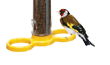
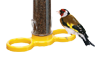
  • Add colour. Most garden birds are attracted to specific colours because of what the colour represents. For example, birds like goldfinches and sparrows are attracted to the colour yellow because they associate it with sunflowers and one of their favourite foods - sunflower seeds! Adding colourful ribbons and ornaments can also help. 
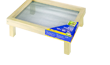
  • Use seed catchers. Seed catchers like this seed buster tray catch spilled seed, saving you cleaning time and saving your neighbours from falling debris!
  • Put anti-collision stickers on your windows. Placing bird feeders close to glass windows can be risky. Many birds get confused by window reflections, which can cause collisions. Anti-collision shapes and stickers simulate the presence of other birds so that our feathered friends won’t fly too close.

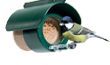
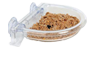
  • Use window feeders. Here at Really Wild Bird Food, we stock a range of window feeders including window trays, hooks and pods, all of which give you a close-up view of the wild birds in your garden while taking up minimal space on your balcony.

  • Use hanging baskets. Hanging baskets can be a great way to add greenery if you’re low on space. Window boxes are also a great idea as they can be filled with a selection of colourful and easy to manage plants.

  • Use climbing plants. Birds love to have a safe place to hide while they wait for their feed, honeysuckle is a great option to use as they are a favourite of thrushes, warblers and blackbirds. 
  • Attract bugs. In the late spring and summer months, common garden birds like blue tits are on the look out for smaller grub-like insects that they can feed their young. Choosing plant varieties that pollinating insects will be attracted to will, in turn, attract birds who are looking for bugs to eat!


Don’t...

  • Excessively use bird sounds. Birds may find loud bird sounds threatening or challenging (and your neighbours may not appreciate them either).

  • Forget to keep the space tidy. Not only can excess seed and debris fall onto your neighbours below, it can also attract pests and turn your balcony into a breeding ground for disease. Regularly cleaning your feeders, water dishes and balcony in general is extremely important for the overall wellbeing of your feathered friends.

  • Pick an overly heavy feeder. Choosing a feeder that can feed multiple birds at once is great; however, make sure your feeder is not so heavy that is poses a risk of damaging your balcony setup!

  • Use windchimes. Unnatural sounds like windchimes can scare birds away from your balcony.

  • Decorate the balcony with bright moving objects. Objects like windsocks or spinners can also be scary for birds and cause them to steer clear of your balcony feeding zone.

  • Store big items like bikes or BBQ grills on your balcony. These large objects can be very intimidating for birds, so try to keep your balcony as uncluttered as possible.

Follow these tips and you should have a bustling bird balcony in no time. Good luck!

Shop Window Feeders

READ MORE: Bird Feeding Tips for Beginners

21 Feb 2024
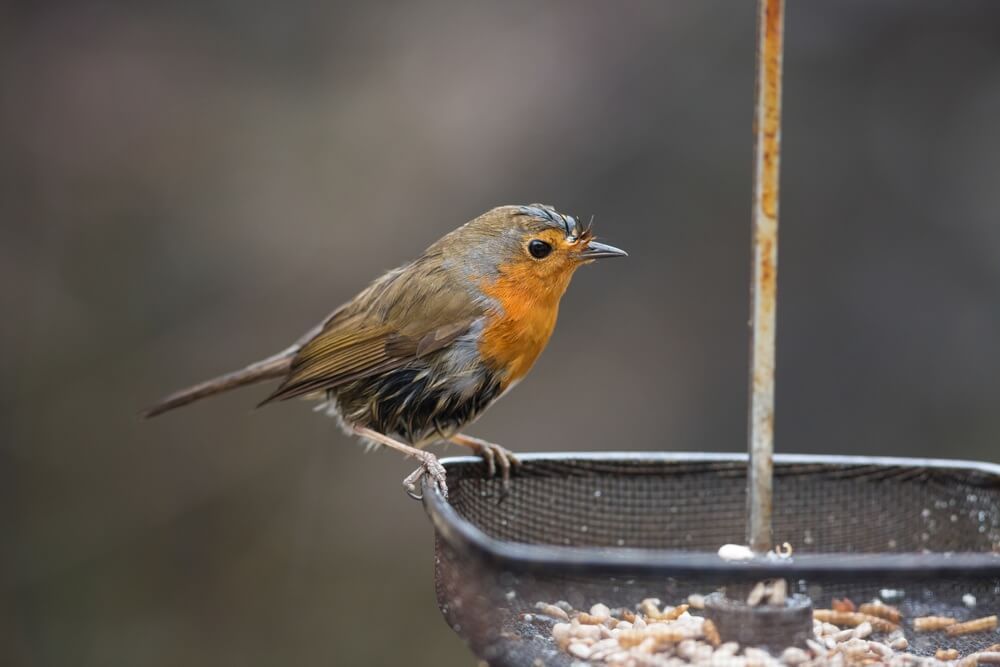
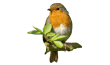
Robin in wet weather

This robin is looking a bit fed up, and I totally get it - we all are!

With the weather forecast looking wet, wet, WET for the foreseeable future, it's worth taking a look at our bird feeding practices to ensure we give our feathered friends a fighting chance. Natural food resources are still very scarce, and this inclement weather is testing, so wild birds need all the help they can get.