











Author: briony


26 Mar 2025
what not to feed wild birds

If you regularly feed the birds or you're planning to start, it is crucial that you know what not to feed wild birds and why. Feeding birds any of these items can potentially cause them harm and so should be avoided.


Bread

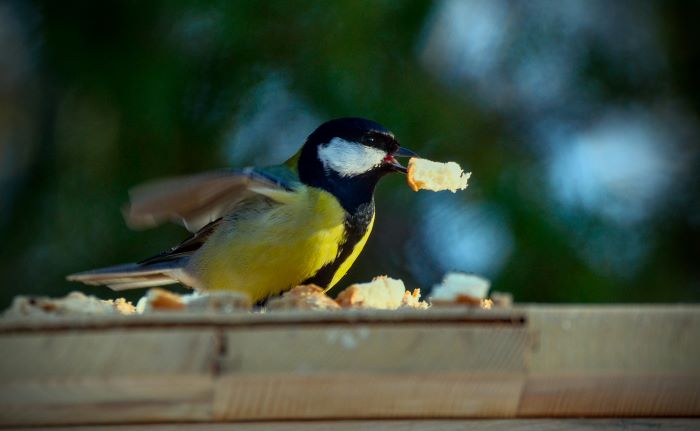
Most of us have probably fed birds bread at some point in our lives and while bread isn't immediately harmful to wild birds, it lacks nutritional value and therefore can lead to malnutrition if consumed in excess. This is why nowadays it is not recommended to feed wild birds' bread – even if you have some leftover!


Chocolate

Chocolate contains theobromine and caffeine, both of which are toxic to birds (in the same way that they are toxic to dogs!). These compounds can lead to seizures, heart arrhythmias and even death in wild birds and so should never be offered as foods!


Onion & Garlic

Both onion and garlic, even in small amounts, can damage a bird's red blood cells and digestion, leading to potentially fatal anaemia and weakness.


Dairy

Most wild birds are lactose intolerant, meaning they cannot properly digest dairy products. Birds can suffer gastrointestinal upset and diarrhoea from even small amounts of milk, cheese or yoghurt, so it is best to avoid these foods completely.


Salt

In the same way that too much salt can be bad for humans, salty foods can be bad for wild birds. Natural foods in the wild contain very little salt, so birds have not adapted to eating it. Feeding wild birds' salty food ( and that would include things like salted peanuts! ) can therefore cause serious health issues, like dehydration and organ failure.


Avocado

Avocados contain Persin, an anti-fungal toxin that can cause heart damage, respiratory distress and even death in birds. Although the exact levels of Persin vary in different parts of the avocado, it's best to keep avocados away from wild birds completely.


Whole Peanuts

Offering whole peanuts can pose a serious choking risk to wild birds, particularly chicks, therefore they should always be offered in a rigid mesh feeder to prevent chicks from choking on large pieces. This is especially important during fledgling season where adults can easily take whole peanuts back to the nest for their young.


Fruit Pits

The pits or seeds of certain fruits like cherries, peaches and apricots contain low levels of cyanide, which is toxic to birds. They can also be a choking risk and therefore should be avoided altogether.


Desiccated Coconut

Desiccated coconut can swell up when it reaches the stomach and cause birds serious discomfort and sometimes even death. This is why any bird seeds containing desiccated coconut should be avoided.


Mouldy Food

Spoiled seed and mouldy food can be harmful for birds, leading to diseases and illness in the same way that it does for humans. If it's too mouldy for you to eat, they probably won't want to eat it either!


So, What Can I Feed Wild Birds?

At Really Wild Bird Food, our bird seed offers unparalleled nutritional quality and cleanliness – your local birds just won't be able to resist!

If you're wondering what you can feed your local birds from your kitchen, check out our blog post What Kitchen Scraps Can I Feed To My Birds?

And if you have any further questions about what not to feed wild birds, please don't hesitate to contact us and a member of our team will be happy to help.
Shop Bird Food

21 Mar 2025

Use discount code GARDENSHOP20 to get 20% Off Everything in our Garden Shop‌  

Treat Your Mum to something special with our great selection of Mother's Day Gifts!

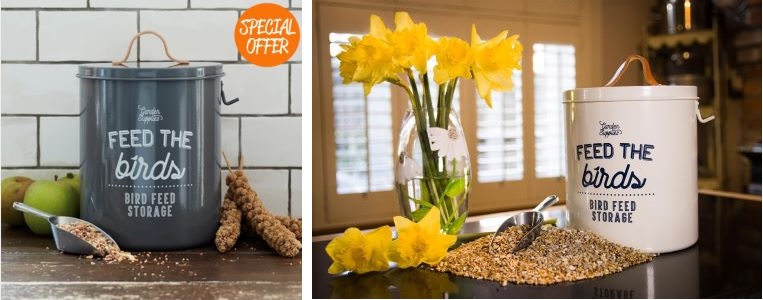
Charcoal                                            Stone

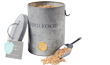
 These stylish 'feed the birds' storage tins and accompanying FREE 2kg of our new Tidy Garden Crunch™ seed mix. Practical and Delicious! There is a choice of 2 colours.

Going like hotcakes this year so be quick before they are all gone!

We can include a lovely hand -written card with all Mother's Day gifts. Just tell us what message you would like to send and we will do the rest! 

SAVE £8. NOW ONLY £29.90 ( RRP £37.90 )

SAVE £8 HERE >>>>


SAVE £15 when you buy one of our Mum's Gardener's Bundles! Practical and stylish, the bundle includes Sophie Conran gardening gloves and Kent and Stowe trowel and fork. Choice of navy or grey gloves.

PLUS a lovely hand written card. 

SAVE £15 on this great bundle!  NOW ONLY £19.95 ( RRP £34.95)

SAVE £15 HERE >>>>


A Cute Gift .... for your Mum and her Robins!


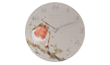
"I Love Robins" Ceramic Dish with a FREE 1kg of Deluxe Robin Crumble ( well - an empty dish is no fun! ) 

ONLY £14.95 ( plus a hand-written card if you tell us what you would like to say )

Find It Here! >>>

SAVE 20% on everything in our Garden Shop Collection 

( it's not just gardening things! ) 

Just Enter Code GARDENSHOP20 at checkout to make your savings!

With very best wishes,

Enjoy Your Birds!

Lesley

06 Mar 2025
how to build a bird feeding station

The easiest way to attract a wide variety of wild birds to your garden is by creating a bird feeding station. Whether you’re a seasoned birder or just starting out, building a bird feeding station is a great way to help out your local feathered friends and observe a selection of different bird species from the comfort of your own home.

Keep reading for our ultimate guide on how to build your very own bird feeding station!


1. Choose a good location

Choosing a good location for your bird feeding station is crucial if you want to help your local birds to feel safe and keep coming back. Your feeding station should be positioned away from high-traffic areas where people, pets and predators could disturb the peace. The station should also be positioned near some kind of natural shelter (like a tree, shrubs or bushes) as this provides an easy getaway route for the birds if there are signs of danger.

From a human point of view, you will want to position your bird feeding station in an easy-to-access location so that you can refill and clean the feeders regularly. You may also want to place the feeders near a window or outdoor seating area so that you can enjoy observing the birds without disturbing them! 


2. Install a Pole or Post

A sturdy post or pole will be the backbone of your feeding station – it’s essential if you want to add hanging bird feeders. At Really Wild Bird Food, we stock a number of different garden poles for you to choose from, but if you would rather repurpose a flag pole or something else from around the house, that can work too.

Ideally your pole should be at least 5 or 6 feet tall so that the birds will be out of reach for most predators. You should also ensure your post is stable and able to withstand various weather conditions. You can do this by either digging a hole at the base or using concrete or gravel to weigh down the pole and secure it in place.


3. Add Feeders

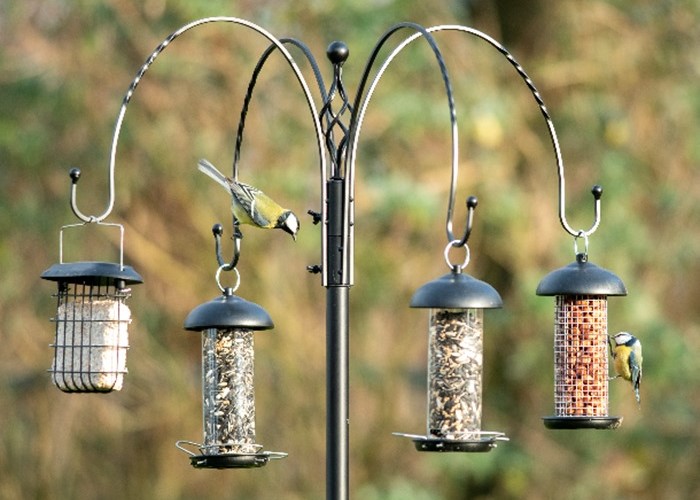
You can use feeding station hooks to attach your bird feeders at a variety of different levels – this will help you attract a selection of different bird species to your garden. Try to also offer a variety of different feeder and food types that cater for different birds; for example, tube feeders filled with sunflower or niger seeds to attract small songbirds, plus suet feeders to attract woodpeckers, nuthatches and wrens.

It is also a good idea to install seed catcher trays at the bottom of your feeding station. These will not only prevent mess from falling seeds, but will also provide a platform for ground-feeding birds.  You may also want to invest in a couple of squirrel proof bird feeders if you don’t want pesky squirrels eating all your seed before the birds arrive!


4. Provide Fresh Water

By providing fresh water for birds to drink and bathe in, your bird feeding station will be even more attractive. Choose a shallow bird bath and make sure you keep it clean to ensure fresh and safe water for the birds.

READ MORE: How to Provide Water for Birds

5. Offer a Range of High-Quality Bird Feeds

Providing a varied assortment of high-quality seeds and feeds is the best way to attract a variety of species to your garden. At Really Wild Bird Food, we stock a huge range of high-quality, home-grown bird foods that your garden birds won’t be able to resist! If you’re looking to attract a specific species to your patch, a quick Google search will tell you their favourite snacks and other feeding preferences, so you can customise your feeding station just for them!


6. Be Patient!

The final step in building a perfect bird feeding station is to be patient! Sometimes it can take a while for birds to find your feeders, but don’t give up hope: soon every bird in town will be flocking to your bird buffet! (Also, don’t forget to replace your feed before it goes stale, even if the birds haven’t eaten all of it).


To see all of our feeding station items in one place, click the link below. If you have any other questions about how to build a bird feeding station, please don’t hesitate to get in touch and a member of our team will be happy to help!

Bird Feeding Stations

27 Feb 2025
what are softbill birds

Softbill birds are birds who, due to their relatively soft beaks, are unable to crack open seeds or penetrate through the tough outer layers of certain husks and grains (whereas hardbill birds like finches and tits can use their beaks to crack open seeds and nuts with ease).

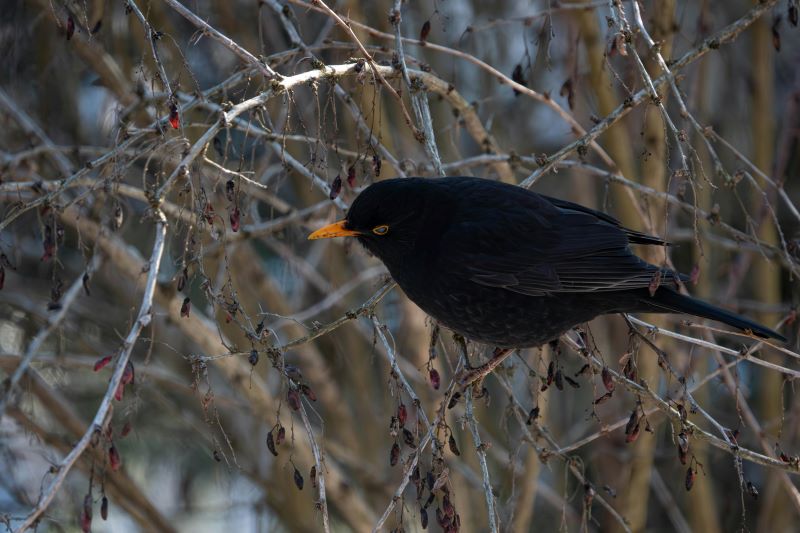
The most common softbill birds in the UK are blackbirds, song thrushes, dunnocks, wrens and robins, all of which can be seen in gardens up and down the country. But how can you attract these softies to your patch? Keep reading to find out!


What Do Softbill Birds Eat?

Softbill birds tend to be mostly insectivorous, meaning they feed on insects, worms and other invertebrates. Softbills are particularly fond of live mealworms, but you can also soak dried mealworms overnight as a special juicy treat!

A variety of fruits and soft grains will also go down well with your local softbills. You can even try to grow berry-bearing plants like hawthorn, holly and honeysuckle in your garden if you want to provide them with a plentiful natural supply of their favourite snacks.

Softbill birds can also eat certain seeds if the husk has been removed. For example, dehusked sunflower hearts are OK for soft-billed species.

At Really Wild Bird Food, we stock a variety of premade softbill bird food mixes that are sure to go down a treat with your local softbils.


What Type of Feeder Is Best for Softbill Birds?

Most softbill birds have a preference for feeding on the ground, as this is where they usually find tasty insects and worms to gobble up. This means you’re unlikely to have much success attracting softbills to your garden using a hanging feeder.

Instead, try one of our ground feeders – but make sure you protect the feeder with a ground feeder guardian if you want to keep predators and larger birds away!


At Really Wild Bird Food, we offer FREE delivery on any orders that contain a bird seed mix, so get your softbill bird food, ground feeder and feeder guardian today to take advantage of this deal!

Shop Softbill Bird Food

30 Jan 2025
urban birds

As the human population continues to expand, so does the demand for new housing. This means that in recent years, our urban landscape has continued to encroach  more and more on natural spaces and countrysides, forcing birds and other wildlife to either move on and find a new place to live, or adapt and survive.

27 Jan 2025

It's Cold, Windy and Wet Out There!

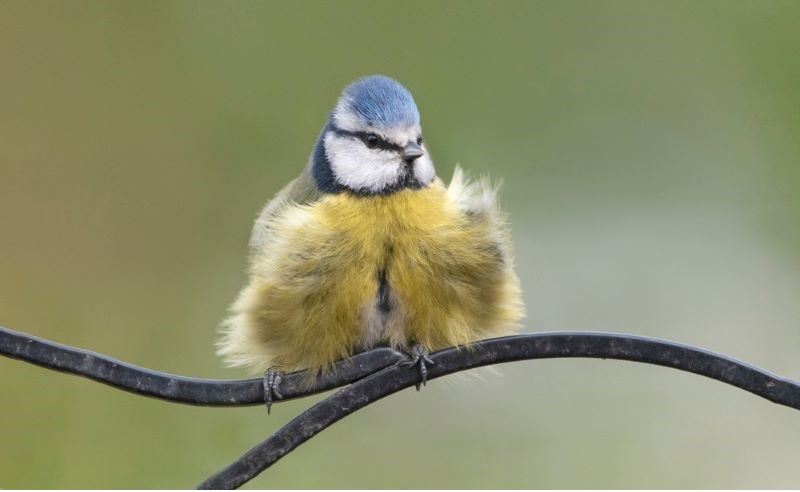
January is proving to be a really tricky month for garden birds as high winds and heavy rain make feeding a challenge. Time at feeders is reduced because, quite simply it is difficult to hang on when branches and feeding stations are being constantly buffeted. So to help your garden birds out, try to relocate feeders , where you can, to more sheltered areas of your garden; perhaps in the lea of a garden hedge or bush.


In terms of feeding, offer them the highest quality and highest energy foods - that will help them to maintain their calorie intake during the reduced time they are able to feed. Check out our Winter Warmer Range of bird foods - all of which have the highest calorie content so desperately needed at this time of year. Just look out for our Winter Warmer Logos!


Shop Warming Suet Blocks Here 

And of course, whilst the days are starting to lengthen, they are still very short in January - contributing to the significant challenge for garden birds.

The third thing you can do is put up some nest boxes or place a few nesting pouches or pockets which will act as a simple shelter to high winds and driving rain. These are an effective and cheap way to provide more shelter.


National Nest Box Week  14th-21st February 

National Nest Box Week takes place every February (starting on Valentine's Day) and heralds the start of the breeding season. With all this bad weather we are currently experiencing, it seems unlikely that garden birds will be considering romance, but you will begin to hear more birdsong in your gardens, as many species will start to establish their territory and attract potential mates to nest. Every year our family business gets behind the initiative which was started by the British Trust for Ornithology ( BTO ) and we will be offering a range of nest boxes to help support romance and true love! More about this in my next newsletter.

Look after your birds.

With best wishes from me and  the A Team  (that's these guys! ) here on the farm!

Lesley

23 Jan 2025

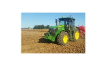
Clarkson’s Farm is a British TV series that follows former Top Gear presenter Jeremy Clarkson as he attempts to run a 1,000-acre farm near Chipping Norton in West Oxfordshire. The first series launched in June 2021 and was a surprise hit on Amazon Prime, attracting more than 7.6 million viewers in its first 28 days.

But has this show’s huge popularity helped or hindered the British farm community? Read on to find out what the team here at Street End Farm reckon…


About Clarkson’s Farm

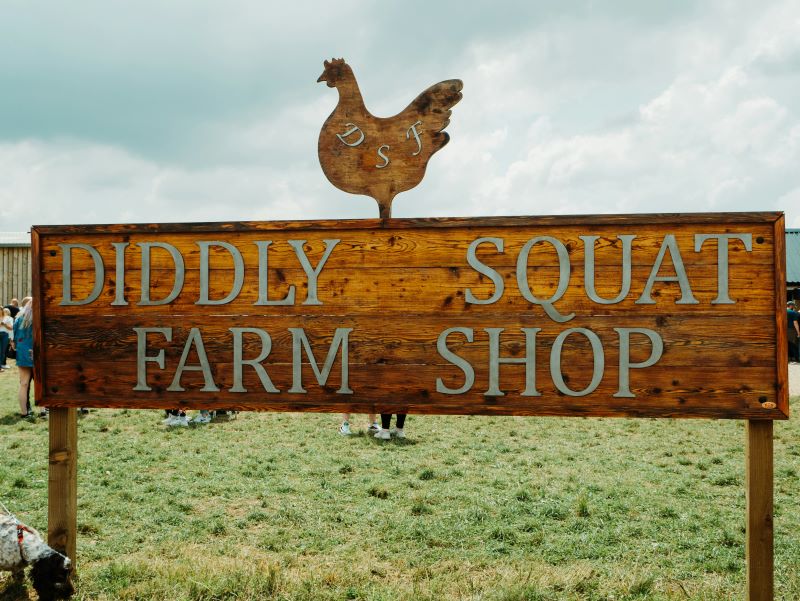
Jeremy Clarkson bought what is now named ‘Diddly Squat Farm’ back in 2008, but he only began working on the farm himself in 2021 after the farmer who had been running it on his behalf retired.

Clarkson, who had no prior farming experience, relied on the help of several local farm workers—particularly Kaleb Cooper, a 21-year-old farmer from Chipping Norton, and Charlie Ireland, a professional agronomist and land agent.

In each instalment of the TV show, Clarkson and his team are faced with a variety of challenges including the worst farming weather in decades, unresponsive crops, unruly animals, and of course an unexpected pandemic.


How Has the Show Been Received?

Fairly well! Despite initial scepticism from UK farmers that Clarkson would use the farming industry as a way to get extra laughs and extra money in his pocket, many in the farming industry have been pleasantly surprised with the show’s content.

It is the general consensus that Clarkson and his team have been successful in shedding light on a lot of the tough issues faced by farmers in the UK at the moment, such as poor mental health from long days of isolation out on the tractors, unpredictable weather as a result of climate change, the loss of farming subsidies, and so much more!

Those in rural communities have been glued to the programme because of its excellent representation of so many of these complex issues that farmers wrestle with in their everyday working lives. Star of the show Kaleb has also inspired many young people to join Young Farmers' Clubs, sparking interest and involvement with farming which is exactly what the industry needs.

Farmer and author James Rebanks has even been quoted as saying that Clarkson has “done more for farmers in one series of Clarkson’s Farm than Countryfile achieved in 30 years” and we’re inclined to agree!

Still, as great as the show is at bringing farming into people’s homes, it should be remembered that Clarkson’s experience is not a perfect reflection of the average farmer’s reality. He reportedly has a £48 million buffer to soften any costly mistakes he makes, and whether he succeeds or fails on the farm, we’re sure his other very many revenue streams, (including a newly opened pub! ) will help him fund the farm. 

Overall, though, it’s a thumbs-up from the Really Wild Bird Food team. The show has drawn huge audiences around the country, so much so that it is on track to release a fourth season in the coming months. We at Street End Farm will definitely be tuning in to see what Clarkson gets up to next!

About Our Farm

30 Oct 2024
where does bird seed come from

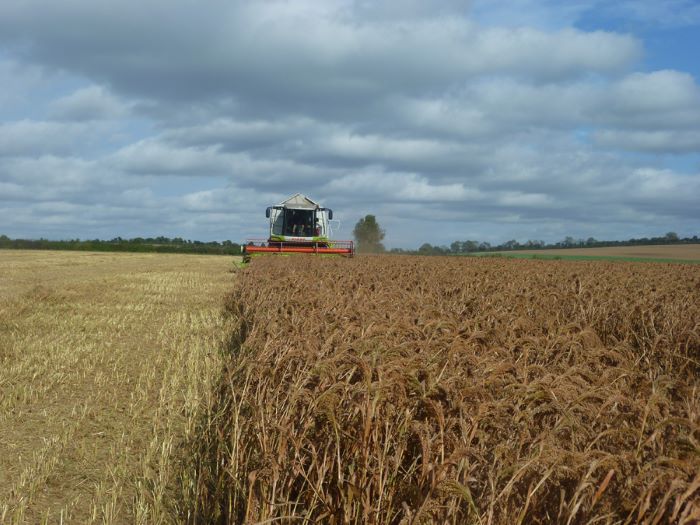
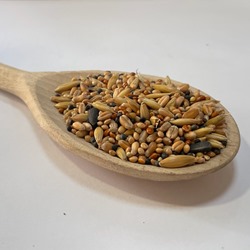
We all know that feeding the birds is a great way to attract them to your garden, but have you ever wondered where your bird seed comes from? This blog will explore the origins of this essential bird food and the journey it takes from our farm to your feeder.