Category: Bird Feeding Advice


09 Apr 2025
do all birds eat seeds

It is a common misconception that, for birds, a healthy diet consists of seeds and nothing else.

It’s true that most birds enjoy seeds, but many bird species have evolved to eat a range of different foods, from seeds to insects to fruit.

So why are seeds such a staple? And what else is on the menu? Read on to find out!


Which Garden Birds Eat Seeds?

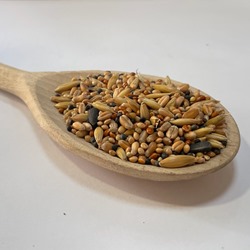
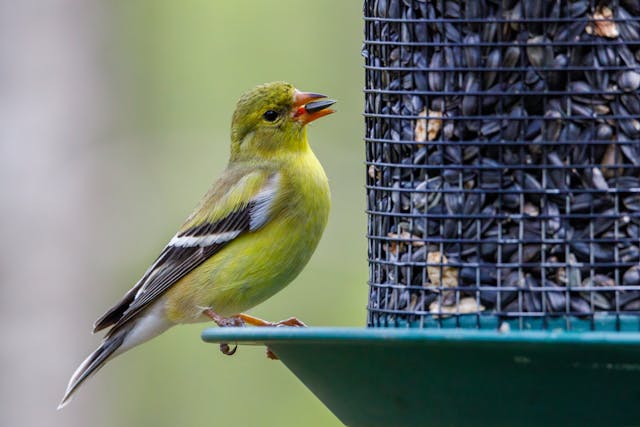
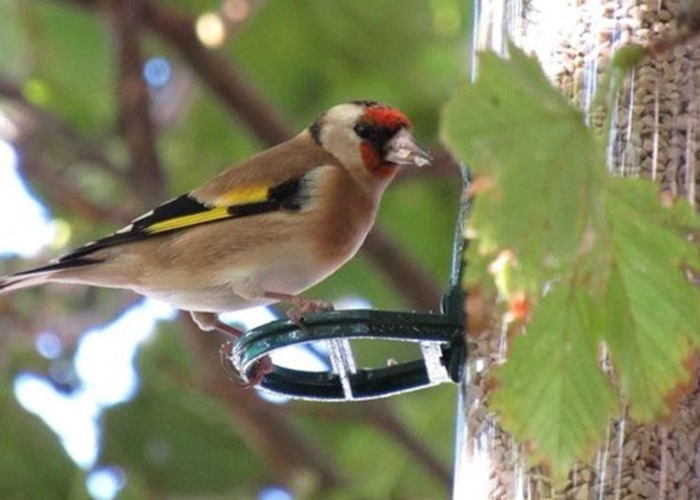
Seed-eating birds tend to have specially-adapted bills that can crack open hard seed coatings and get to the nutritious and tasty interior. For example, birds like finches and sparrows have conical bills that are perfect for munching on seeds.

Pigeons and doves will also happily consume a wide range of seeds, although they are also known to eat insects, fruits and even human food scraps.


Which Garden Birds Don’t Eat Seeds?

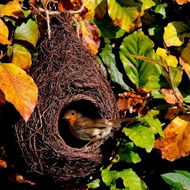
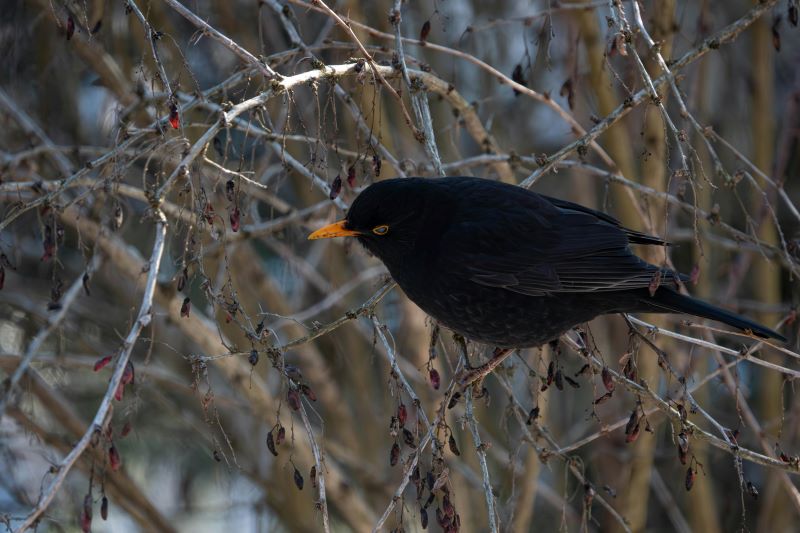
Some birds – like robins, swallows, blackbirds and warblers – don’t have a hard beak to crack open seeds. These birds are known as ‘softbills’ and tend to be insectivorous, primarily eating small insects like beetles, worms, caterpillars and flies.

Softbills will also happily eat fruit, suet and special softbill bird foods like naked oats and mealworms.


Why Do Birds Eat Seeds?

Seeds are packed with essential nutrients that birds need to survive, and different types of seed offer different health benefits to birds. For example, sunflower seeds are an oil-rich source of protein, vitamins and minerals, providing long-lasting energy for garden birds – something that is essential for the colder winter months. The husks of sunflower seeds can even be removed, leaving the ‘sunflower heart’ behind, a treat that even softbill birds can enjoy!

Another reason why birds eat seeds is because they’re often abundant and relatively easy for birds to find. Particularly during the autumn and spring, many plants produce seeds as part of their reproductive cycle, leaving a wide variety of goodies behind for birds to scoop up, store and eat. Plus, compared to other food sources like insects and fruits, seeds are a reliable food source that can be found all year round.

So, next time you’re filling your bird feeders, consider varying the food you put out so that every bird species visiting your garden can find a tasty snack. Here at Really Wild Bird Food, we stock a wide range of different bird feeds, including seeds, mealworms, suet and so much more!

Use the button below to browse our bird food range and treat your garden birds to a proper buffet!

Shop Bird Foods

26 Mar 2025
what not to feed wild birds

If you regularly feed the birds or you're planning to start, it is crucial that you know what not to feed wild birds and why. Feeding birds any of these items can potentially cause them harm and so should be avoided.


Bread

Most of us have probably fed birds bread at some point in our lives and while bread isn't immediately harmful to wild birds, it lacks nutritional value and therefore can lead to malnutrition if consumed in excess. This is why nowadays it is not recommended to feed wild birds' bread – even if you have some leftover!


Chocolate

Chocolate contains theobromine and caffeine, both of which are toxic to birds (in the same way that they are toxic to dogs!). These compounds can lead to seizures, heart arrhythmias and even death in wild birds and so should never be offered as foods!


Onion & Garlic

Both onion and garlic, even in small amounts, can damage a bird's red blood cells and digestion, leading to potentially fatal anaemia and weakness.


Dairy

Most wild birds are lactose intolerant, meaning they cannot properly digest dairy products. Birds can suffer gastrointestinal upset and diarrhoea from even small amounts of milk, cheese or yoghurt, so it is best to avoid these foods completely.


Salt

In the same way that too much salt can be bad for humans, salty foods can be bad for wild birds. Natural foods in the wild contain very little salt, so birds have not adapted to eating it. Feeding wild birds' salty food ( and that would include things like salted peanuts! ) can therefore cause serious health issues, like dehydration and organ failure.


Avocado

Avocados contain Persin, an anti-fungal toxin that can cause heart damage, respiratory distress and even death in birds. Although the exact levels of Persin vary in different parts of the avocado, it's best to keep avocados away from wild birds completely.


Whole Peanuts

Offering whole peanuts can pose a serious choking risk to wild birds, particularly chicks, therefore they should always be offered in a rigid mesh feeder to prevent chicks from choking on large pieces. This is especially important during fledgling season where adults can easily take whole peanuts back to the nest for their young.


Fruit Pits

The pits or seeds of certain fruits like cherries, peaches and apricots contain low levels of cyanide, which is toxic to birds. They can also be a choking risk and therefore should be avoided altogether.


Desiccated Coconut

Desiccated coconut can swell up when it reaches the stomach and cause birds serious discomfort and sometimes even death. This is why any bird seeds containing desiccated coconut should be avoided.


Mouldy Food

Spoiled seed and mouldy food can be harmful for birds, leading to diseases and illness in the same way that it does for humans. If it's too mouldy for you to eat, they probably won't want to eat it either!


So, What Can I Feed Wild Birds?

At Really Wild Bird Food, our bird seed offers unparalleled nutritional quality and cleanliness – your local birds just won't be able to resist!

If you're wondering what you can feed your local birds from your kitchen, check out our blog post What Kitchen Scraps Can I Feed To My Birds?

And if you have any further questions about what not to feed wild birds, please don't hesitate to contact us and a member of our team will be happy to help.

Shop Bird Food

19 Mar 2025
are sunflower hearts good for birds

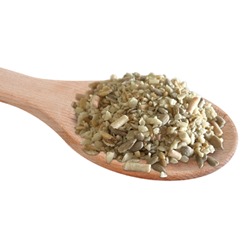
Yes, sunflower hearts are good for birds! Sunflower hearts (that is, sunflower seeds with their husks removed) provide essential nutrition and calories, which is particularly important during winter but can be helpful all year round. A wide variety of birds enjoy eating sunflower hearts, so if you put some out in your garden, you should find that they disappear very quickly!

Read on for more reasons to feed sunflower hearts to your garden birds.


Sunflower hearts are high in calories.

Wild birds require high-calorie foods like sunflower hearts (which are rich in oil and protein) to survive cold spells and keep themselves warm. In the UK, this is relevant throughout the year because of our famously unpredictable weather — you never know when the temperature is going to plummet!


Sunflower hearts are easy to eat.

Whole sunflower seeds are also high in calories, but sunflower hearts have the added benefit of being easier for birds to eat. Some birds struggle to remove the shells from sunflower seeds, so why not do the job for them and put out sunflower hearts that have already had their shells removed?

Put simply: by offering shell-free sunflower seeds, you’re enabling a wider variety of birds to access the health benefits of sunflower hearts!


Sunflower hearts make less mess.

On a related note, sunflower hearts aren’t just good for birds – they’re also good for your garden! The shells (or husks) from sunflower seeds will often end up littering the area beneath your feeding table or bird feeder. This can be messy to look at and could also potentially attract pests.

Rather than wasting time cleaning up all of those shells, go with sunflower hearts. These are great for staying tidy (which is why they’re a key ingredient in our best-selling Tidy Garden Mix™).


Sunflower hearts are perfect for combining with other seeds.

Just like humans, birds require a varied diet. Sunflower hearts are good for birds, but an even better option is to offer a seed mix that combines sunflower hearts with other nutritious ingredients. This way, birds can enjoy the healthy fat and energy provided by sunflower hearts, while still getting vital nutrients and minerals from other seeds.

By including sunflower hearts in your seed mixes, you are helping birds to enjoy a high-energy, healthy diet!


Ready to start serving sunflower hearts?

As we’ve established, sunflower hearts are very good for birds when they are enjoyed as part of a varied diet. High-calorie bird feeds like sunflower hearts help to keep our feathered friends in robust health, especially during the winter and other cold periods.

If you want to add some sunflower hearts to your bird feeding station, we’ve got some great options for you here at Really Wild Bird Food. We offer premium sunflower hearts, as well as sunflower heart chips for smaller birds and fledglings. Use the buttons below to shop healthy sunflower hearts for your garden birds.

Premium Sunflower Hearts   Sunflower Heart Chips

06 Mar 2025
how to build a bird feeding station

The easiest way to attract a wide variety of wild birds to your garden is by creating a bird feeding station. Whether you’re a seasoned birder or just starting out, building a bird feeding station is a great way to help out your local feathered friends and observe a selection of different bird species from the comfort of your own home.

Keep reading for our ultimate guide on how to build your very own bird feeding station!


1. Choose a good location

Choosing a good location for your bird feeding station is crucial if you want to help your local birds to feel safe and keep coming back. Your feeding station should be positioned away from high-traffic areas where people, pets and predators could disturb the peace. The station should also be positioned near some kind of natural shelter (like a tree, shrubs or bushes) as this provides an easy getaway route for the birds if there are signs of danger.

From a human point of view, you will want to position your bird feeding station in an easy-to-access location so that you can refill and clean the feeders regularly. You may also want to place the feeders near a window or outdoor seating area so that you can enjoy observing the birds without disturbing them! 


2. Install a Pole or Post

A sturdy post or pole will be the backbone of your feeding station – it’s essential if you want to add hanging bird feeders. At Really Wild Bird Food, we stock a number of different garden poles for you to choose from, but if you would rather repurpose a flag pole or something else from around the house, that can work too.

Ideally your pole should be at least 5 or 6 feet tall so that the birds will be out of reach for most predators. You should also ensure your post is stable and able to withstand various weather conditions. You can do this by either digging a hole at the base or using concrete or gravel to weigh down the pole and secure it in place.


3. Add Feeders

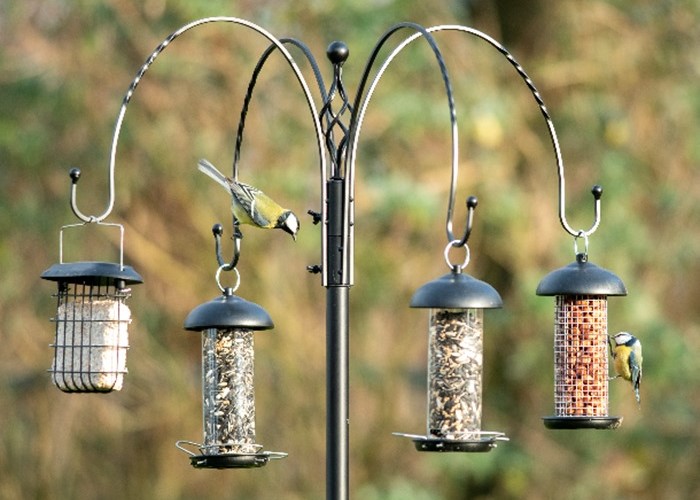
You can use feeding station hooks to attach your bird feeders at a variety of different levels – this will help you attract a selection of different bird species to your garden. Try to also offer a variety of different feeder and food types that cater for different birds; for example, tube feeders filled with sunflower or niger seeds to attract small songbirds, plus suet feeders to attract woodpeckers, nuthatches and wrens.

It is also a good idea to install seed catcher trays at the bottom of your feeding station. These will not only prevent mess from falling seeds, but will also provide a platform for ground-feeding birds.  You may also want to invest in a couple of squirrel proof bird feeders if you don’t want pesky squirrels eating all your seed before the birds arrive!


4. Provide Fresh Water

By providing fresh water for birds to drink and bathe in, your bird feeding station will be even more attractive. Choose a shallow bird bath and make sure you keep it clean to ensure fresh and safe water for the birds.

READ MORE: How to Provide Water for Birds

5. Offer a Range of High-Quality Bird Feeds

Providing a varied assortment of high-quality seeds and feeds is the best way to attract a variety of species to your garden. At Really Wild Bird Food, we stock a huge range of high-quality, home-grown bird foods that your garden birds won’t be able to resist! If you’re looking to attract a specific species to your patch, a quick Google search will tell you their favourite snacks and other feeding preferences, so you can customise your feeding station just for them!


6. Be Patient!

The final step in building a perfect bird feeding station is to be patient! Sometimes it can take a while for birds to find your feeders, but don’t give up hope: soon every bird in town will be flocking to your bird buffet! (Also, don’t forget to replace your feed before it goes stale, even if the birds haven’t eaten all of it).


To see all of our feeding station items in one place, click the link below. If you have any other questions about how to build a bird feeding station, please don’t hesitate to get in touch and a member of our team will be happy to help!

Bird Feeding Stations

27 Feb 2025
what are softbill birds

Softbill birds are birds who, due to their relatively soft beaks, are unable to crack open seeds or penetrate through the tough outer layers of certain husks and grains (whereas hardbill birds like finches and tits can use their beaks to crack open seeds and nuts with ease).

The most common softbill birds in the UK are blackbirds, song thrushes, dunnocks, wrens and robins, all of which can be seen in gardens up and down the country. But how can you attract these softies to your patch? Keep reading to find out!


What Do Softbill Birds Eat?

Softbill birds tend to be mostly insectivorous, meaning they feed on insects, worms and other invertebrates. Softbills are particularly fond of live mealworms, but you can also soak dried mealworms overnight as a special juicy treat!

A variety of fruits and soft grains will also go down well with your local softbills. You can even try to grow berry-bearing plants like hawthorn, holly and honeysuckle in your garden if you want to provide them with a plentiful natural supply of their favourite snacks.

Softbill birds can also eat certain seeds if the husk has been removed. For example, dehusked sunflower hearts are OK for soft-billed species.

At Really Wild Bird Food, we stock a variety of premade softbill bird food mixes that are sure to go down a treat with your local softbils.


What Type of Feeder Is Best for Softbill Birds?

Most softbill birds have a preference for feeding on the ground, as this is where they usually find tasty insects and worms to gobble up. This means you’re unlikely to have much success attracting softbills to your garden using a hanging feeder.

Instead, try one of our ground feeders – but make sure you protect the feeder with a ground feeder guardian if you want to keep predators and larger birds away!


At Really Wild Bird Food, we offer FREE delivery on any orders that contain a bird seed mix, so get your softbill bird food, ground feeder and feeder guardian today to take advantage of this deal!

Shop Softbill Bird Food

10 Jan 2025
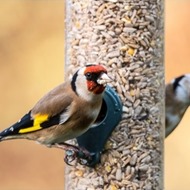
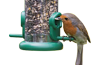
Bird eating sunflower heart chips from a feeder

Both sunflower hearts and sunflower seeds appear in many bird food mixes and provide good nutrition for a wide variety of bird species. But which should you be putting in your feeders: hearts or seeds?

Let's find out.


Sunflower Hearts vs Sunflower Seeds: What's the difference?

Sunflower seeds have hard shells, which birds typically remove in order to eat the seed inside. Sunflower hearts are simply sunflower seeds that have had their shells removed in advance. Whether you buy seeds or hearts, the sunflower heart is the part that your garden birds will actually eat.

Order now from Really Wild Bird Food – we offer FREE DELIVERY on all sunflower seeds and hearts!

Sunflower Hearts   Sunflower Seeds

Sunflower seeds are packed with many key nutrients (like iron, magnesium and vitamins A, B, C and D) so they're always a great choice for bird tables and hanging feeders. But the question remains: is it better to offer sunflower hearts or sunflower seeds?


The Case for Sunflower Hearts

Many birds are not able to de-shell sunflower seeds, but still enjoy eating what's inside them. Sunflower hearts give these birds easy access to delicious, nutritious treats that they would not have been able to access otherwise!

Since sunflower hearts are such a popular food source and easy to access, you'll find that they attract a wide variety of wild birds to your garden. They're a great, versatile option if you aren't sure what kinds of birds live in your area.

Sunflower hearts are much less messy than sunflower seeds, too. With sunflower seeds, you'll likely end up with a small pile of shells beneath your feeder. These can build up and turn into mulch over time. Sunflower hearts don't have shells, helping to prevent this issue! Sunflower hearts are a high energy, less mess option if you would prefer not to have shells left in your garden.

SEE ALSO: No Mess Bird Food


The Case for Sunflower Seeds

At this point, you might be thinking that sunflower hearts are the better option every time—after all, they make life easier for the birds, and they don't leave a mess on your lawn. Why does anyone buy sunflower seeds with the shells on?

Well, the shell-on seeds do offer a few benefits of their own. Firstly, whole sunflower seeds can only be eaten by birds who are able to de-shell them; this may seem like a negative thing, but if you are specifically trying to attract these birds and you don't want their food to be stolen by competitors, sunflower seeds may be preferable to sunflower hearts.

What other aces do sunflower seeds have up their sunflower sleeves? To answer that question, ask yourself why sunflower seeds have shells on them to begin with.

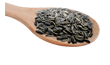
The answer is simple: to protect the contents. Sunflower seed shells with no cracks provide a barrier against damp and mould; nature's protective coating. So sunflower seeds (of which there are black and striped varieties) may be preferable in periods of extreme weather, particularly wet weather where sunflower hearts may go soggy or really cold weather where the hearts can freeze. There is also an argument that black sunflower seeds are nature's bounty and that small seed eating birds should be working for their food in the most natural way possible. Garden birds will naturally visit a feeder, remove a seed and take it to the safety of a nearby tree or bush to then enjoy it. Offering sunflower hearts in a hanging feeder may just be too easy! and birds will spend more time actually on the feeders, which is lovely to watch but can potentially increase the risk of disease transfer and also of sparrohawks swooping in on pre-occupied garden birds.


Which is better: sunflower hearts or sunflower seeds?

Sunflower hearts are generally more popular than sunflower seeds because more birds can eat them and they leave less mess. However, as we've discussed, there are still some good reasons to go with sunflower seeds instead!

Whichever you choose to use in your garden, Really Wild Bird Food can help. We offer a wide range of quality bird feeds, many of which are grown on our very own farm in Hampshire—and we offer FREE DELIVERY on all orders that include bird seed!

Sunflower Hearts   Sunflower Seeds

Image source: reallywildbirdfood.co.uk/straight-seeds/sunflower-heart-chips/shc
30 Oct 2024
why aren't birds coming to my feeder

If you’ve set up a new bird feeder in your garden but aren’t getting any feathered visitors, you may be wondering where you’ve gone wrong. This is a common issue amongst bird enthusiasts and can be particularly frustrating if you have spent time and effort creating a bird-friendly safe space in your garden.

This blog will go over some of the possible reasons why your bird feeder isn’t getting any visitors and provide you with some tips and tricks so that you can have the most popular bird feeders in town!


11 Oct 2024

Don’t let your lack of a garden stop you from feeding the birds! A balcony can be just as much of a sweet haven for our feathered friends if set up correctly.

This blog will explain the dos and don’ts of how to create a balcony feeding station so that you can attract and care for your local wild birds no matter how little space you have.


Do...

  • Use indigenous plants and flowers. Decorating your balcony with local plants and vegetation will help to put the birds at ease and welcome them into your space – plus, native plants will thrive in your local climate making them easier to maintain!

  • Catch birds’ attention using attractive sounds. The light splashing from a table top fountain or gentle bird sound recordings can help to show local birds that your balcony is safe. You can even buy solar powered bird baths and fountains to further attract garden birds to come to your balcony for a drink or midday dip.

  • Add colour. Most garden birds are attracted to specific colours because of what the colour represents. For example, birds like goldfinches and sparrows are attracted to the colour yellow because they associate it with sunflowers and one of their favourite foods - sunflower seeds! Adding colourful ribbons and ornaments can also help. 
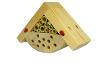
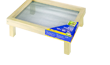
  • Use seed catchers. Seed catchers like this seed buster tray catch spilled seed, saving you cleaning time and saving your neighbours from falling debris!
  • Put anti-collision stickers on your windows. Placing bird feeders close to glass windows can be risky. Many birds get confused by window reflections, which can cause collisions. Anti-collision shapes and stickers simulate the presence of other birds so that our feathered friends won’t fly too close.

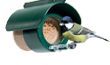
  • Use window feeders. Here at Really Wild Bird Food, we stock a range of window feeders including window trays, hooks and pods, all of which give you a close-up view of the wild birds in your garden while taking up minimal space on your balcony.

  • Use hanging baskets. Hanging baskets can be a great way to add greenery if you’re low on space. Window boxes are also a great idea as they can be filled with a selection of colourful and easy to manage plants.

  • Use climbing plants. Birds love to have a safe place to hide while they wait for their feed, honeysuckle is a great option to use as they are a favourite of thrushes, warblers and blackbirds. 
  • Attract bugs. In the late spring and summer months, common garden birds like blue tits are on the look out for smaller grub-like insects that they can feed their young. Choosing plant varieties that pollinating insects will be attracted to will, in turn, attract birds who are looking for bugs to eat!


Don’t...

  • Excessively use bird sounds. Birds may find loud bird sounds threatening or challenging (and your neighbours may not appreciate them either).

  • Forget to keep the space tidy. Not only can excess seed and debris fall onto your neighbours below, it can also attract pests and turn your balcony into a breeding ground for disease. Regularly cleaning your feeders, water dishes and balcony in general is extremely important for the overall wellbeing of your feathered friends.

  • Pick an overly heavy feeder. Choosing a feeder that can feed multiple birds at once is great; however, make sure your feeder is not so heavy that is poses a risk of damaging your balcony setup!

  • Use windchimes. Unnatural sounds like windchimes can scare birds away from your balcony.

  • Decorate the balcony with bright moving objects. Objects like windsocks or spinners can also be scary for birds and cause them to steer clear of your balcony feeding zone.

  • Store big items like bikes or BBQ grills on your balcony. These large objects can be very intimidating for birds, so try to keep your balcony as uncluttered as possible.

Follow these tips and you should have a bustling bird balcony in no time. Good luck!

Shop Window Feeders

READ MORE: Bird Feeding Tips for Beginners