














Our resident vet Lesley responds to the RSPB's controversial new guidance on supplementary bird feeding.
Many of our customers have been in touch asking for advice regarding the RSPB's recent announcement that, in their opinion, supplementary feeding of seeds and peanuts to garden birds should cease between May and October. I would like to set out our position and my personal thoughts on this topic.
Firstly, let me say that from a veterinary perspective and as bird-loving farmers, we do not agree with the RSPB's recommendation that you should stop feeding seeds and peanuts during the summer months. The issue is not what you feed your wild birds; it is how you feed them.
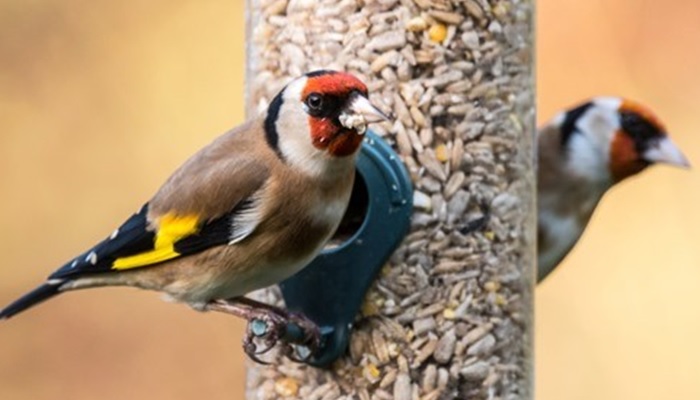
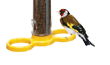
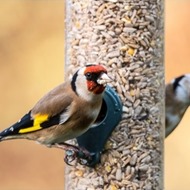
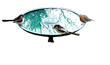
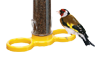
Pictured: goldfinches enjoying our High Energy Blend™ bird seed mix.
We know that if you encourage birds (or any other animals) into close proximity with one another, there is an increased risk of spreading disease – just like children at the start of a school term. For garden birds, this applies to any infectious organism (things like avian pox, scaly leg, gut parasites and bacteria) but it is specifically the infection of finches with the Trichomonas protozoan parasite which has prompted the RSPB's change in position regarding supplementary feeding.
While greenfinch numbers have declined significantly in the last 20 years (the organism has been causing disease in finches since around 2006), there is now evidence that those numbers are recovering. Many of our customers are reporting new sightings of greenfinches and increased numbers returning to their gardens, which is excellent news – and I believe that the hygienic feeding practices we have been advising and promoting for very many years are now making a difference. Things are improving!
However, there is still much to do and we must not become complacent.
Why We Need to Keep Feeding Wild Birds
We all love our garden birds and we have a duty to look after them. That duty of care, however, also extends to feeding them and helping them to survive in what is an increasingly challenging world for them. By this, I mean the significant changes in climate (we in the UK now experience severe drought, persistent flooding and frequent extreme high winds) and the huge decline in natural food availability (insects, invertebrates and natural seeds) as a result of climate change, urbanisation and intensive farming practices.
The breeding season is the key time to ensure success of any species.
Without successful broods of young healthy chicks, bird numbers will plummet. There are already many garden birds whose numbers are in decline: house sparrows, tree sparrows, blackbirds, thrushes and starlings to name a few. These declines are not disease related but climate and environment related, and this is why garden birds have come to rely on us so heavily for supplementary food. If they didn't need the food, they wouldn't be at our feeders.
Take the autumn months as an example. In autumn, most birds leave us! They head off to find natural food sources because they don't need our help. During the breeding months (April to July) they most certainly do need our help. We absolutely will not be restricting their vital food source during these months, and we recommend that you don't either.
The Scientific Bit
With my veterinary hat on, I must also comment on the 'science review' that led to the new RSPB recommendations. It is worth mentioning that this work is currently not peer reviewed. In my opinion, to hold scientific credibility, research work should be peer reviewed before publication.
While the trial did show the presence of the Trichomonas organism on swabs taken from food, feeders and water baths in gardens where diseased birds were present, of particular note is that only seed feeders were swabbed (to my knowledge no other foodstuff was tested) and from a relatively small sample size of 106, the organism was only detected in 1.88% of samples of seed from feeder (2 out of 106) and they did not isolate the organism at all from 108 swabs taken from the actual feeder ports / mesh. Positive detections were much higher, however, in swabs taken from base trays (19%) and water baths (24%). These findings do suggest that water baths and feeder trays / flat feeding surfaces are likely to be the main nidus of infection and we should pay particular attention to those when setting a strategy to minimise the transmission of disease.
Sick birds will often spend prolonged periods of time just sitting on feeder trays or water baths (or the ground) trying unsuccessfully to eat and drink, regurgitating contaminated saliva. The Trichomonas organism thrives best in damp, unhygienic conditions and can be killed quite easily by heat and drying. This is why more diseased birds are seen during the colder, wetter winter months.
What to Do Now
It is very important that we all continue to do the right thing by our garden birds and just revisit our home setup to minimise the risk of spreading disease in and around feeding areas and water baths. I will be writing more on this topic in the near future, but here are my headline recommendations to help you look after your garden birds:
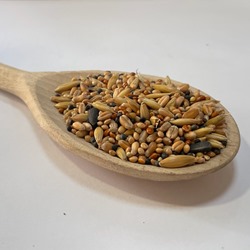
- Continue to feed high-quality, high-energy food (including seeds, peanuts, suet and mealworms) during the breeding season in particular. Opt for no-mess, husk-free seed mixes. Also, live mealworms are a particularly good choice for the breeding season because they're high in protein and moisture and easy for adults to transport back to the nest.
- Feed according to demand. We recommend filling your feeders on a daily basis, and only putting in as much food as your birds will consume in one day. Putting fresh food out every day is better for the birds, plus it will mean that you notice right away when your feeders need cleaning!
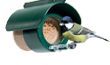
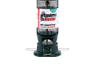
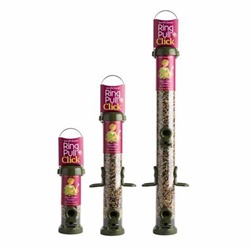
- Clean all feeders weekly. We recommend using easy-to-clean hanging feeders whose ports and bases can be easily removed for a more thorough scrub. Browse our easy-clean feeder range here.
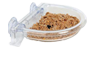
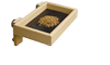
- Don't attach seed trays to the bottom of feeders. Sick birds will often sit on seed trays for prolonged periods and these can act as reservoirs of infection.
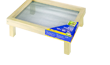
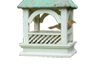
- Avoid using the flat surface of bird tables or flat ground feeders (unless they can be regularly cleaned). Sick birds can sit for prolonged periods on feeding tables, drooling saliva that's contaminated with the protozoa. This can then infect healthy birds visiting the table for up to 5 days, so avoid leaving this potential reservoir.
- Relocate your feeders on a regular basis. You should also make sure the areas under your feeders are brushed or scraped up as frequently as possible (but at least once a week).
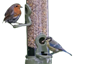
- Avoid using multi-feeder feeding stations that encourage large numbers of birds to congregate in close proximity. Instead, place individual feeders in separate locations, and as noted above, remember to clear up the area underneath each feeder regularly.
- Be extra-vigilant about bird bath hygiene. As the results above show (a 24% isolation rate), bird bath hygiene is absolutely critical for the continued health of your garden birds. Swap out any large, heavy, difficult-to-clean bird baths for smaller baths that can be easily brought indoors for scrubbing. Birds love to poo in their baths, so please make it part of your daily ritual to throw out the dirty water, give the bath a quick scrub, and replenish with clean water. Your garden birds will thank you!
- Help your family. We know how much our older relatives love their garden birds and how much pure enjoyment they get from their company. Often it is not easy for them to take down feeders, move feeders or clean them easily. So if you (or the grandchildren!) are able to give a helping hand, it can only be to the benefit of the local wild birds.
- Rest up during the autumn months. As mentioned above, bird numbers in our gardens start to decline naturally (depending on the weather) from August / September through to November, when they can mostly fulfil their needs elsewhere. This is therefore the most suitable time to scale back your bird feeding efforts
As many of our customers know, I am a vet with a First-Class Honours degree and I do have many years of experience feeding wild birds. It is a fact that no two gardens are the same, no two bird populations are the same and no two days are the same! But one thing that is the same is our love of garden birds and our desire to do our very best for them.
Please keep a close eye on what is happening in your garden – and if you have any doubts, queries or questions, I will be very happy to help you out in any way I can. You can send me your questions here.
Enjoy and take care of your garden birds!
Lesley